The plant dashboard for automotive and components
Takt-paced line, robots and quick model changeover.
Try the demo free See the pricing
- 8 standard lines loaded
- 6 lockout energy sources
- 5 reference standards
How the work is done in automotive
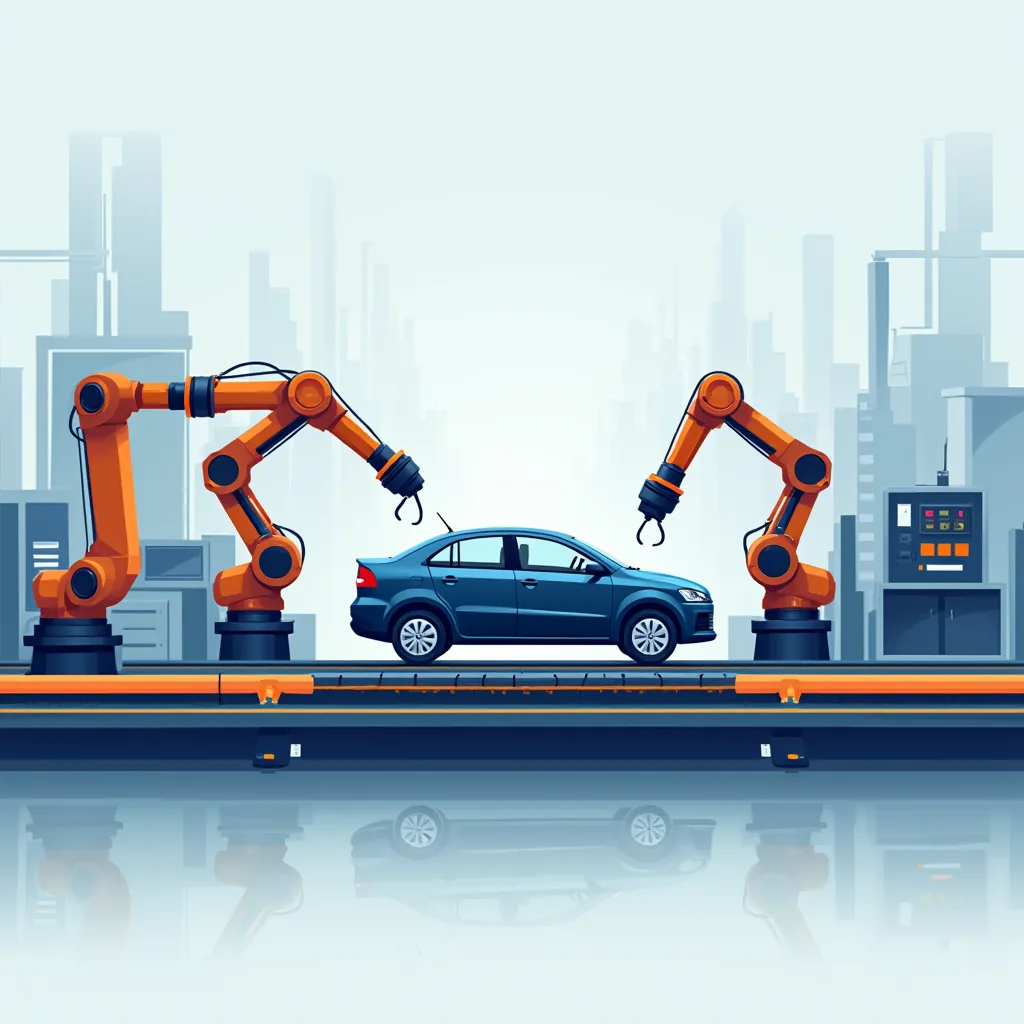
A line running to cycle time with robots and presses: the cycle time rules and the temptation to step in without stopping is the greatest enemy. Safety comes from the interlock, not from your reflexes.
The jobs that set the pace
- Line production to takt
- Tool and die change
- Work in a robot cell
- Press maintenance
- Internal logistics with AGVs and forklifts
The lines it comes with as standard
- Assembly line 1
- Assembly line 2
- Robotic welding cell
- Plastic injection moulding
- Painting
- Internal logistics
- Final verification
- Tooling shop
Lockout/tagout, with isolation point and verification
The dashboard does not ask “what energies does your equipment have?”: in the automotive profile they are already there, each one with where it is isolated and how you check that it is isolated. It is what an inspection asks to see in writing.
| Energy | Isolation point | Verification |
|---|---|---|
| Electrical | Switchgear cubicle isolator | Verification of the absence of voltage and discharge of capacitors |
| Pneumatic | Quick exhaust valve with lockout | Bleed and gauge at 0 bar |
| Hydraulics | Injection moulding machine power pack | Accumulator discharge and platen chocking |
| Stored mechanical energy | Robot axis lockout | Robot in maintenance position and brake applied |
| Thermal | Isolation of the screw heaters | Temperature below 60 °C |
| Shielding gases | Mixing line valve | Flare purge |
The high-risk procedures, written down
Five procedures specific to automotive, written in the vocabulary of the sector and available inside the dashboard so you can adapt them to your plant.
Entry into a robot cell
Lockout of the robot and its periphery: a stopped robot can restart on its own if someone resets it outside.
Die change (SMED)
Mechanical chocking of the die and captive key: speed does not remove the chock.
Press lockout
Flywheel, accumulator and counterweight: three energies on top of the electrical one.
Controlled safety bypass
Bypassing an interlock requires written authorisation, a maximum time and a verified removal.
Internal traffic
AGV and forklift aisles kept apart from pedestrians; you do not cut across the line through the machine gap.
Equipment and reference regulations
Equipment typical of this profile
- Welding robot
- Injection moulding machine
- Stamping press
- AGV
- Paint booth
- Overhead conveyor
- Torque-controlled nutrunner
- Screw compressor
Regulations that frame the work
- RD 1215/1997 · work equipment
- UNE-EN ISO 10218 · industrial robots
- IATF 16949 · quality system
- RD 486/1997 · workplaces
- UNE-EN ISO 14118 · prevention of unexpected start-up
Current references the dashboard uses to organise the documentation. IndustriaKit is a documentation tool: it does not replace the risk assessment or legal advice.
- Risk assessment of the robot cell
- Torque validation records
- Line skills matrix
What the dashboard does with all this
Contractors and coordination of activities
Contractors working on site join free, upload their documentation and the traffic light decides who can work. RD 171/2004 coordination with minutes and signature.
Permits with QR codes
Work permit with a printable notice: in the field it is scanned and signed from a phone. LOTO warning when the job calls for it.
Maintenance and OEE
Queue prioritised by criticality, statutory maintenance schedules with their date, counters based on real usage and an OEE panel per line with a Pareto of stoppages.
Personnel and training
Fitness for work, training and health surveillance by job role, with the medical data kept outside the dashboard by design.
Open it with the automotive profile and compare it with your folder
The demo opens with no card and no sales call. You choose this same sector and walk into a plant that looks like yours, with sample data you can play with without breaking anything.
Enter the demo What obligations does your plant have? Free assessment →
The other industries in the dashboard
Each profile brings its own vocabulary, its own areas, its own energies and its own procedures. There are sixteen.